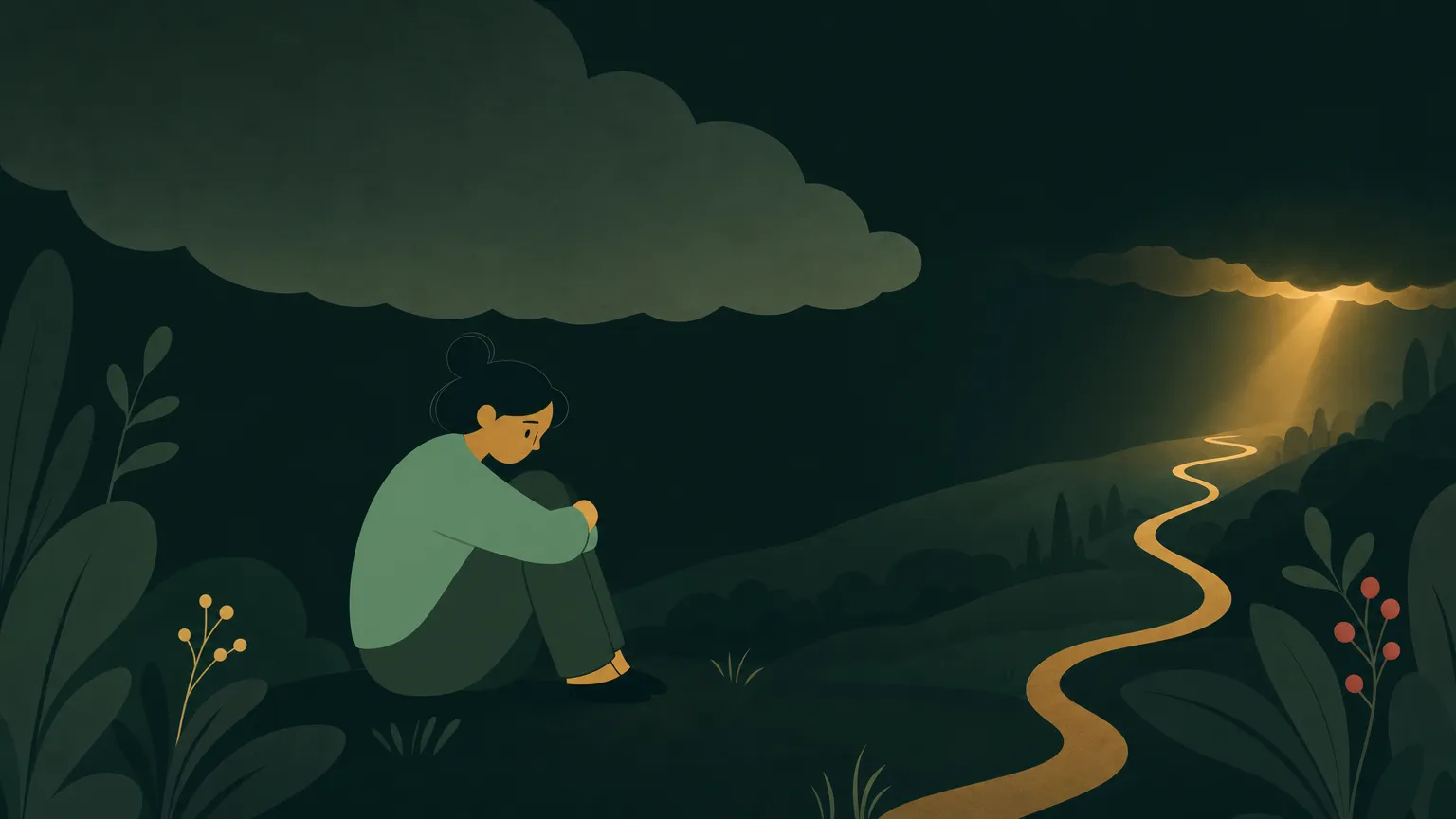
Loss of drive and inability to start tasks during withdrawal, directly caused by depleted dopamine systems.
40-55%
Peaks day 14
~Peaks day 45
Recovery Timeline
| Metric | Value |
|---|---|
| Prevalence among quitters | 40-55% |
| Typical onset | Day 3 |
| Peak intensity | Day 14 |
| Expected resolution | ~Day 45 |
| Total duration | 42 days (approximate) |
You know what you should do. You just cannot make yourself do it. The dishes pile up. Emails go unanswered. Projects stall. This is not laziness — it is neurochemistry.
Why Motivation Disappears
Motivation is a dopamine function. Specifically, dopamine in the mesolimbic pathway signals that an action is worth the effort. Chronic THC use downregulates this system. When you quit, your brain has a dopamine deficit that makes almost everything feel not worth doing.
This is the same mechanism behind the "Valley of Disappointment" — that period around weeks 4–6 where acute withdrawal is over but life still feels flat and pointless. Your dopamine system is recovering but has not reached the tipping point where everyday activities feel rewarding again.
Important: this is distinct from clinical depression, although it can feel identical. The key difference is that withdrawal-related amotivation is time-limited and resolves as dopamine normalizes.
Timeline
- Onset: Days 3–7 (initially masked by more acute symptoms)
- Peak: Days 14–45 (the Valley of Disappointment)
- Resolution: Days 45–90 as dopamine regulation substantially normalizes
What Helps
1. Tiny Actions (Atomic Habits Approach)
You cannot wait for motivation to return before acting. Instead, make actions absurdly small: "Put on running shoes" instead of "Go for a run." "Open the document" instead of "Write the report." Completing tiny actions generates small dopamine hits that gradually rebuild the motivation circuit.
2. Exercise (Non-Negotiable)
Exercise is the single most effective dopamine-boosting activity available to you. It also increases BDNF (brain-derived neurotrophic factor), which accelerates neural recovery. Even 20 minutes of moderate exercise produces measurable dopamine elevation.
3. Novel Experiences
Novelty activates the dopamine system through a different pathway than habit. Try something new — a new recipe, a new route, a new hobby. Novelty-seeking is a natural dopamine generator that does not require pre-existing motivation.
4. Track Your Recovery
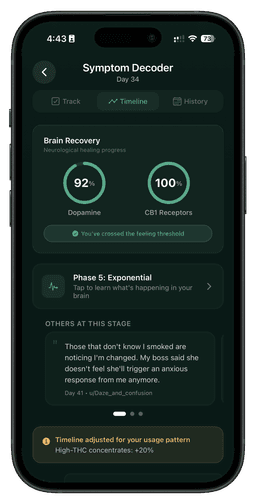
Seeing progress is motivating even when you do not feel motivated. Klar’s brain recovery visualization shows your dopamine system healing day by day. On the flattest days, the data reminds you that recovery is happening whether you feel it or not.
When to Seek Help
- Amotivation persists beyond 8 weeks with zero improvement
- You are unable to attend work, school, or basic self-care
- Thoughts of hopelessness or self-harm accompany the lack of motivation
988 Suicide & Crisis Lifeline: Call or text 988
Common questions
How long does low motivation last after quitting weed?+
Is low motivation normal when quitting cannabis?+
What helps with low motivation after stopping weed?+
Track your progress
See your brain healing in real time
Klar tracks 47 withdrawal symptoms and visualizes your dopamine and CB1 receptor recovery day by day.
Related Symptoms
Related Timeline
Related articles
Medical Disclaimer: This content is for informational purposes only and does not constitute medical advice, diagnosis, or treatment. Always consult a qualified healthcare provider for medical guidance. If you are in crisis, call 988 (Suicide & Crisis Lifeline) or text HOME to 741741.
Every figure on this page traces to peer-reviewed research and the 30-symptom dataset behind Klar. How we source our data