
Inability to focus or sustain attention during cannabis withdrawal as the prefrontal cortex recalibrates.
35-50%
Peaks day 10
~Peaks day 28
Recovery Timeline
| Metric | Value |
|---|---|
| Prevalence among quitters | 35-50% |
| Typical onset | Day 2 |
| Peak intensity | Day 10 |
| Expected resolution | ~Day 28 |
| Total duration | 26 days (approximate) |
You read the same paragraph three times and retain nothing. Meetings blur together. Tasks that once took 30 minutes now take two hours. Concentration difficulties are among the most functionally impairing withdrawal symptoms, especially for people who need to work during recovery.
Why It Happens
Sustained attention is a prefrontal cortex function. THC impairs prefrontal activity during use and the recovery period. Two mechanisms are at play:
- Dopamine deficit: Dopamine in the prefrontal cortex is essential for working memory and sustained attention. With depleted dopamine, your brain cannot maintain focus on a single task.
- Glutamate/GABA imbalance: The excitatory/inhibitory balance that enables selective attention is disrupted. Your brain cannot effectively filter distractions.
Compounding this, poor sleep during withdrawal further impairs cognitive function. Sleep deprivation alone is enough to cause severe concentration deficits.
Timeline
- Onset: Days 2–5
- Peak: Days 7–14
- Significant improvement: Days 14–21
- Near-normal: Days 21–30
What Helps
1. Pomodoro Technique
Work in 25-minute focused blocks with 5-minute breaks. During early withdrawal, reduce to 15-minute blocks if needed. Short, defined periods are easier for a depleted prefrontal cortex to handle than open-ended focus demands.
2. Eliminate Distractions
Your brain cannot filter distractions well right now. Help it by removing them: phone in another room, noise-canceling headphones, close unnecessary tabs. External environment control compensates for reduced internal filtering.
3. Exercise Before Cognitive Work
20–30 minutes of exercise before a mentally demanding task temporarily boosts prefrontal dopamine and norepinephrine, improving focus for 60–90 minutes afterward.
4. Accept Reduced Capacity
If possible, reduce your cognitive load during peak withdrawal. This is not weakness — it is realistic management of a temporary neurological state. Tackle important tasks when focus is best (usually late morning) and save routine tasks for low-focus periods.
When to Seek Help
- Concentration does not improve at all after 4 weeks
- You had pre-existing ADHD that is significantly worsened
- Cognitive impairment puts you or others at risk (e.g., driving, operating machinery)
Common questions
How long does poor concentration last after quitting weed?+
Is poor concentration normal when quitting cannabis?+
What helps with poor concentration after stopping weed?+
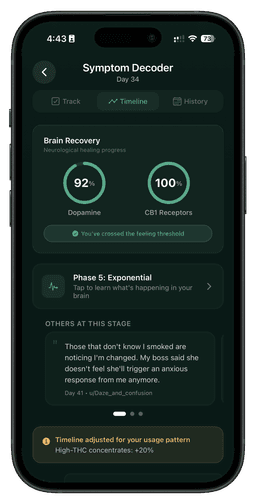
Track your progress
See your brain healing in real time
Klar tracks 47 withdrawal symptoms and visualizes your dopamine and CB1 receptor recovery day by day.
Related Symptoms
Related Timeline
Related articles
Medical Disclaimer: This content is for informational purposes only and does not constitute medical advice, diagnosis, or treatment. Always consult a qualified healthcare provider for medical guidance. If you are in crisis, call 988 (Suicide & Crisis Lifeline) or text HOME to 741741.
Every figure on this page traces to peer-reviewed research and the 30-symptom dataset behind Klar. How we source our data