Physical agitation and inability to relax during cannabis withdrawal, driven by norepinephrine surges and GABA depletion.
40-50%
Peaks day 5
~Peaks day 18
Recovery Timeline
| Metric | Value |
|---|---|
| Prevalence among quitters | 40-50% |
| Typical onset | Day 1 |
| Peak intensity | Day 5 |
| Expected resolution | ~Day 18 |
| Total duration | 17 days (approximate) |
Your leg bounces. You pace. You pick up your phone, put it down, pick it up again. You cannot read, watch TV, or focus on anything. Restlessness is one of the DSM-5 diagnostic criteria for Cannabis Withdrawal Syndrome, and for good reason — it affects roughly half of people who quit.
The Neuroscience
THC is a central nervous system depressant. It dampens neural activity by inhibiting glutamate release and enhancing GABA signaling. Your brain adapts by increasing excitatory tone to compensate. When THC is removed, you have elevated excitatory activity with reduced inhibition — a recipe for physical agitation.
Additionally, withdrawal triggers norepinephrine surges (your fight-or-flight neurotransmitter). Your body is in a mild state of hyperarousal. This is the same mechanism that drives withdrawal anxiety and contributes to insomnia.
Timeline
- Onset: Day 1–2
- Peak: Days 3–7 (coinciding with peak withdrawal)
- Resolution: Days 14–21 as GABA/glutamate balance normalizes
What Helps
1. Vigorous Exercise
Unlike fatigue, restlessness responds well to intense physical activity. Running, cycling, swimming, or weight training burns off excess norepinephrine and produces calming endorphins. This is probably the single most effective intervention for agitation.
2. Cold Exposure
A cold shower (60–90 seconds) or cold water face immersion activates the dive reflex, which rapidly downregulates sympathetic nervous system activity. It sounds extreme, but the vagal tone shift is immediate and measurable.
3. Progressive Muscle Relaxation
Systematically tensing and releasing muscle groups (start at your feet, work up) gives your body something physical to do with the agitation while simultaneously triggering the parasympathetic relaxation response.
4. Reduce Stimulants
Caffeine amplifies norepinephrine. If restlessness is severe, reduce or eliminate caffeine for the first 2 weeks. Switch to herbal tea or decaf.
When to Seek Help
- Restlessness prevents sleep for more than 3 consecutive nights
- You feel unable to control physical movements
- Agitation leads to aggressive behavior
SAMHSA Helpline: 1-800-662-4357
Common questions
How long does restlessness last after quitting weed?+
Is restlessness normal when quitting cannabis?+
What helps with restlessness after stopping weed?+
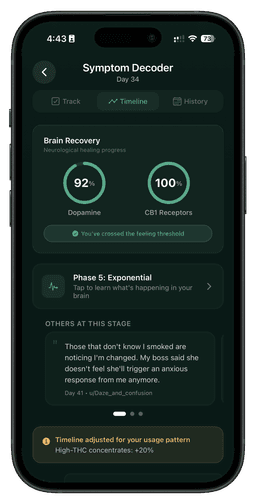
Track your progress
See your brain healing in real time
Klar tracks 47 withdrawal symptoms and visualizes your dopamine and CB1 receptor recovery day by day.
Related Symptoms
Related Timeline
Related articles
Medical Disclaimer: This content is for informational purposes only and does not constitute medical advice, diagnosis, or treatment. Always consult a qualified healthcare provider for medical guidance. If you are in crisis, call 988 (Suicide & Crisis Lifeline) or text HOME to 741741.
Every figure on this page traces to peer-reviewed research and the 30-symptom dataset behind Klar. How we source our data