
Lightheadedness and vertigo during cannabis withdrawal, caused by blood pressure changes and autonomic nervous system recalibration.
20-30%
Peaks day 5
~Peaks day 14
Recovery Timeline
| Metric | Value |
|---|---|
| Prevalence among quitters | 20-30% |
| Typical onset | Day 1 |
| Peak intensity | Day 5 |
| Expected resolution | ~Day 14 |
| Total duration | 13 days (approximate) |
The room tilts when you stand up. Everything feels slightly off-balance. Dizziness during cannabis withdrawal is less common than insomnia or irritability, but for those who experience it, it can be alarming.
Why Quitting Weed Causes Dizziness
THC affects your autonomic nervous system — the system that controls heart rate, blood pressure, and balance without conscious effort. Regular THC exposure causes your body to adapt to its vasodilatory effects (THC widens blood vessels, lowering blood pressure). When you remove THC, your cardiovascular system temporarily overcorrects.
This causes orthostatic hypotension — a drop in blood pressure when you stand up quickly. Blood pools in your legs before your body can compensate, temporarily reducing blood flow to your brain. The result: lightheadedness, tunnel vision, or a feeling that you might faint.
Other contributing factors include dehydration (reduced appetite means reduced fluid intake), hyperventilation from anxiety, and disrupted vestibular processing as the endocannabinoid system recalibrates.
Timeline
- Onset: Days 1–3
- Peak: Days 3–7
- Resolution: Days 10–14 for most people
What Helps
1. Stand Up Slowly
When getting out of bed or standing from a chair, pause halfway. Sit on the edge of the bed for 30 seconds before standing. This gives your cardiovascular system time to adjust.
2. Stay Hydrated
Dehydration worsens orthostatic hypotension. Aim for 2–3 liters of water daily. Add electrolytes if you are also experiencing night sweats.
3. Eat Regular Small Meals
Blood sugar drops can compound dizziness. Even if your appetite is low, eat small, frequent meals to maintain stable blood glucose.
4. Breathing Exercises
If dizziness accompanies anxiety, you may be hyperventilating. Box breathing (4 seconds in, 4 hold, 4 out, 4 hold) normalizes CO2 levels and reduces lightheadedness.
When to Seek Help
- You faint or nearly faint
- Dizziness is accompanied by chest pain or rapid heartbeat
- Symptoms persist beyond 3 weeks
If symptoms are severe, see a healthcare provider to rule out other causes.
Common questions
How long does dizziness last after quitting weed?+
Is dizziness normal when quitting cannabis?+
What helps with dizziness after stopping weed?+
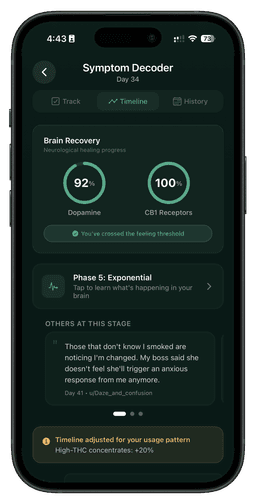
Track your progress
See your brain healing in real time
Klar tracks 47 withdrawal symptoms and visualizes your dopamine and CB1 receptor recovery day by day.
Related Symptoms
Related Timeline
Related articles
Medical Disclaimer: This content is for informational purposes only and does not constitute medical advice, diagnosis, or treatment. Always consult a qualified healthcare provider for medical guidance. If you are in crisis, call 988 (Suicide & Crisis Lifeline) or text HOME to 741741.
Every figure on this page traces to peer-reviewed research and the 30-symptom dataset behind Klar. How we source our data