
Reduced hunger or complete loss of appetite after quitting cannabis is caused by disruption of the endocannabinoid system's role in hunger regulation.
40-50% of people quitting cannabis
Peaks day 5
~Peaks day 21
Recovery Timeline
| Metric | Value |
|---|---|
| Prevalence among quitters | 40-50% of people quitting cannabis |
| Typical onset | Day 1 |
| Peak intensity | Day 5 |
| Expected resolution | ~Day 21 |
| Total duration | 20 days (approximate) |
The thought of food makes your stomach turn. Meals you used to enjoy taste like cardboard. You might go an entire day and realize you’ve barely eaten. If you’re quitting cannabis, your appetite isn’t just “off” — the entire system your brain uses to regulate hunger has temporarily lost its calibration.
Why Quitting Weed Kills Your Appetite
The “munchies” aren’t just a stoner stereotype — they’re a well-studied neurological phenomenon. THC stimulates appetite through multiple mechanisms:
- CB1 receptor activation in the hypothalamus directly triggers hunger signals, even when your body doesn’t need food.
- Enhanced olfactory sensitivity. THC makes food smell and taste more appealing by activating CB1 receptors in the olfactory bulb.
- Dopamine release from eating. THC amplifies the reward signal your brain gets from food, making eating more pleasurable.
With regular use, your brain comes to rely on THC for appetite signaling. When you quit:
- Your hypothalamus undersignals hunger (downregulated CB1 receptors)
- Food smells and tastes less appealing (reduced olfactory sensitivity)
- Eating produces less pleasure (blunted dopamine response)
- Nausea and stomach discomfort further suppress appetite
When Does It Start, Peak, and End?
- Onset: Day 1–2. Most people notice reduced appetite immediately.
- Peak: Days 3–7. This is when appetite is lowest. Some people struggle to eat more than a few hundred calories per day.
- Improvement: Days 7–14. Small amounts of appetite begin returning. Bland, simple foods become tolerable.
- Resolution: Days 14–28. Appetite normalizes for most. You may find your appetite settles at a lower baseline than during heavy use (which was artificially inflated by THC).
What Actually Helps
1. Eat by the Clock, Not by Hunger
Don’t wait until you feel hungry — you won’t. Set alarms for 3–4 meals/snacks per day and eat something at each one, even if it’s small. Regular eating helps retrain your hypothalamus to generate hunger signals independently.
2. Start with Calorie-Dense Liquids
If solid food feels impossible, drink your calories: smoothies, protein shakes, bone broth, soups. These are easier to consume when nausea is present and still provide the nutrients your body needs for recovery.
3. Bland and Simple
BRAT diet principles work well here: bananas, rice, applesauce, toast. These are easy to digest and unlikely to trigger nausea. Don’t try to force yourself to eat complex, flavorful meals during week 1 — keep it simple.
4. Ginger for Nausea
If nausea is suppressing your appetite, ginger is well-evidenced for nausea relief. Fresh ginger tea, ginger chews, or ginger supplements (250mg 4x daily) can make eating more manageable.
5. Light Exercise Before Meals
A 15–20 minute walk before eating can stimulate appetite naturally. Exercise promotes gastric motility and can trigger mild hunger signals even when your endocannabinoid system isn’t cooperating.
When to Seek Professional Help
- You’ve lost more than 5% of your body weight in the first two weeks
- You cannot keep any food or liquids down for more than 24 hours
- You’re experiencing severe abdominal pain alongside appetite loss
- Appetite hasn’t improved at all after 3 weeks
SAMHSA National Helpline: 1-800-662-4357 (free, confidential, 24/7)
Common questions
How long does loss of appetite last after quitting weed?+
Is loss of appetite normal when quitting cannabis?+
What helps with loss of appetite after stopping weed?+
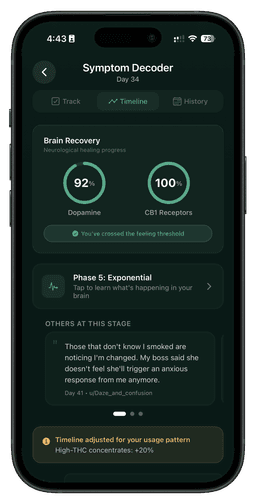
Track your progress
See your brain healing in real time
Klar tracks 47 withdrawal symptoms and visualizes your dopamine and CB1 receptor recovery day by day.
Related Symptoms
Related Timeline
Related articles
Medical Disclaimer: This content is for informational purposes only and does not constitute medical advice, diagnosis, or treatment. Always consult a qualified healthcare provider for medical guidance. If you are in crisis, call 988 (Suicide & Crisis Lifeline) or text HOME to 741741.
Every figure on this page traces to peer-reviewed research and the 30-symptom dataset behind Klar. How we source our data