Day 1 Without Weed: What to Expect
The first 24 hours of your brain reset
Last updated: July 26, 2026
CB1 Receptor Recovery
2%
Dopamine System Recovery
3%
THC is still present in your system. CB1 receptors are beginning to sense the change. Withdrawal hasn't fully started yet — your brain is still processing the last dose.
You made the decision. The last joint is gone, the edibles are thrown out, and now you’re staring down the first 24 hours. Day 1 is more about psychology than physiology — THC is still in your system, so full withdrawal hasn’t kicked in yet. But your brain knows something is different.
What’s Happening in Your Brain
THC has a half-life of roughly 1–3 days in the bloodstream (longer in fat tissue, where it can persist for weeks). On day 1, you still have significant THC levels circulating. Your CB1 receptors are still partially occupied, but they’re starting to “notice” the declining supply.
The initial symptoms you feel aren’t full withdrawal — they’re more like your brain’s early warning system. Cravings, mild restlessness, and perhaps a vague sense of unease. Your endocannabinoid system is registering the change and beginning to adjust.
Common Symptoms on Day 1
- Cravings — The most immediate symptom. Your brain’s habit circuits fire at every usual trigger: the time of day you normally smoke, the spot on the couch, seeing your smoking buddy. Cravings on day 1 are more about habit than physical withdrawal.
- Anxiety — Mild to moderate. Partly anticipatory (worrying about how hard this will be) and partly neurochemical as GABA systems begin adjusting.
- Irritability — You may feel edgy, short-tempered, or frustrated. This tends to escalate over the next 2–3 days.
- Sleep difficulty — The first night is often hard. Your brain is used to THC-assisted sleep. Without it, falling asleep may take longer than usual.
- Reduced appetite — Food may seem less appealing without THC enhancing the experience.
Your Action Plan for Day 1
1. Remove All Cannabis and Paraphernalia
If you haven’t already, get everything out of your home. Pipes, papers, grinders, edibles, that emergency stash. Give it to someone or throw it away. Having access dramatically increases relapse risk on the hardest days ahead.
2. Tell Someone
Text a friend, tell your partner, or post in r/leaves. Making your decision known to another person creates accountability and opens a support channel you’ll need during days 3–7.
3. Get Moving
Exercise today. Even a 30-minute walk. Physical activity starts building the natural dopamine and endorphin pathways that will replace cannabis as your mood regulator. It also helps with tonight’s sleep.
4. Prepare for Tonight
Sleep is going to be disrupted. Accept this now rather than panicking at midnight. Set up your bedroom for the best chance: cool room, no screens 1 hour before bed, chamomile tea, a boring book. See our insomnia guide for more strategies.
5. Practice Your First Craving Surf
When the first craving hits (it will), surf it. Set a 20-minute timer, observe the urge without acting on it, and notice how it peaks and fades. This first successful surf builds confidence for the harder ones coming.
Remember: Day 1 is the most important day because it’s the one that makes all other days possible. You don’t have to get through the whole 90 days today. You just have to get through today.
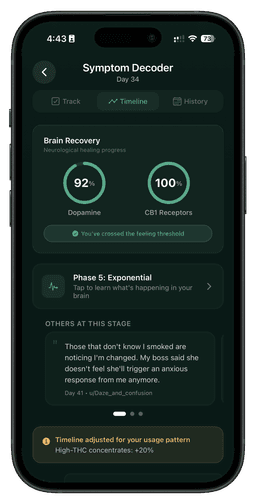
Track your progress
See your brain healing in real time
Klar tracks 47 withdrawal symptoms and visualizes your dopamine and CB1 receptor recovery day by day.
Related Articles
Medical Disclaimer: This content is for informational purposes only and does not constitute medical advice, diagnosis, or treatment. Always consult a qualified healthcare provider for medical guidance. If you are in crisis, call 988 (Suicide & Crisis Lifeline) or text HOME to 741741.
Every figure on this page traces to peer-reviewed research and the 30-symptom dataset behind Klar. How we source our data