Day 3 Without Weed: The Hardest Day Begins
Peak withdrawal intensity approaches
Last updated: July 26, 2026
CB1 Receptor Recovery
6%
Dopamine System Recovery
7%
THC blood levels have dropped substantially. CB1 receptors are largely unoccupied, triggering peak neurochemical withdrawal. Your brain is in full recalibration mode.
Day 3 is where most people either break through or break down. This is statistically the most common day for relapse — and for good reason. Your brain’s withdrawal response is approaching peak intensity. Everything feels harder. But if you can get through today, you’ve survived the steepest climb.
What’s Happening in Your Brain
By 72 hours, most of the circulating THC has been metabolized. Your CB1 receptors are running almost entirely without cannabinoid input for the first time in however long you were using. The withdrawal response is now at or near its maximum:
- Cortisol is elevated 30–50% above normal
- GABA activity is suppressed, glutamate is elevated (neurological hyperexcitability)
- Dopamine production is at its lowest point
- Your amygdala is maximally hyperactive
This is the inflection point. From here, your brain begins the process of upregulating CB1 receptors — building new ones and making existing ones more sensitive. Recovery is starting, even though symptoms are at their worst.
The Full Symptom Picture
Day 3 is when most symptoms are active simultaneously:
- Intense cravings that may feel physical
- Maximum irritability — the shortest fuse you’ve ever had
- Severe insomnia — possibly the worst night yet
- Anxiety — may escalate to panic-like episodes
- Night sweats at their worst
- Headaches — from vasorebound and tension
- No appetite — food may be repulsive
- Nausea — GI system is destabilized
Your Action Plan for Day 3
1. Survival Mode Is Acceptable
Today is not the day for productivity, big decisions, or emotional conversations. Your only job is to not use cannabis. Everything else can wait. Lower your standards for everything except this one goal.
2. Break the Day Into Blocks
Don’t think about the whole day. Think about the next 2 hours. “I just need to get to noon. Then I just need to get to 3 PM. Then dinner. Then bed.” Small time blocks make an overwhelming day manageable.
3. Use Every Craving Tool You Have
Craving surfing, cold showers, intense exercise, calling someone, changing your environment. Today you may need to deploy multiple tools per craving episode. That’s fine. Do what works.
4. Eat Something (Anything)
Even if food is the last thing you want. A banana, some crackers, a protein shake. Your brain needs fuel for the recovery work it’s doing. Running on empty amplifies every symptom.
5. Go to Sleep Early
You’ll probably still sleep poorly, but get into bed early and give yourself maximum opportunity. Physical exhaustion from exercise helps. Melatonin (0.3–0.5mg) may help with onset.
72 hours is a major milestone in recovery communities for a reason. If you make it through today, you’ve proven you can handle the worst this process throws at you. Tomorrow will still be hard — but the trajectory starts changing.
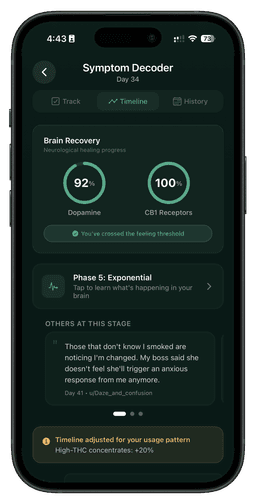
Track your progress
See your brain healing in real time
Klar tracks 47 withdrawal symptoms and visualizes your dopamine and CB1 receptor recovery day by day.
Related Articles
Medical Disclaimer: This content is for informational purposes only and does not constitute medical advice, diagnosis, or treatment. Always consult a qualified healthcare provider for medical guidance. If you are in crisis, call 988 (Suicide & Crisis Lifeline) or text HOME to 741741.
Every figure on this page traces to peer-reviewed research and the 30-symptom dataset behind Klar. How we source our data