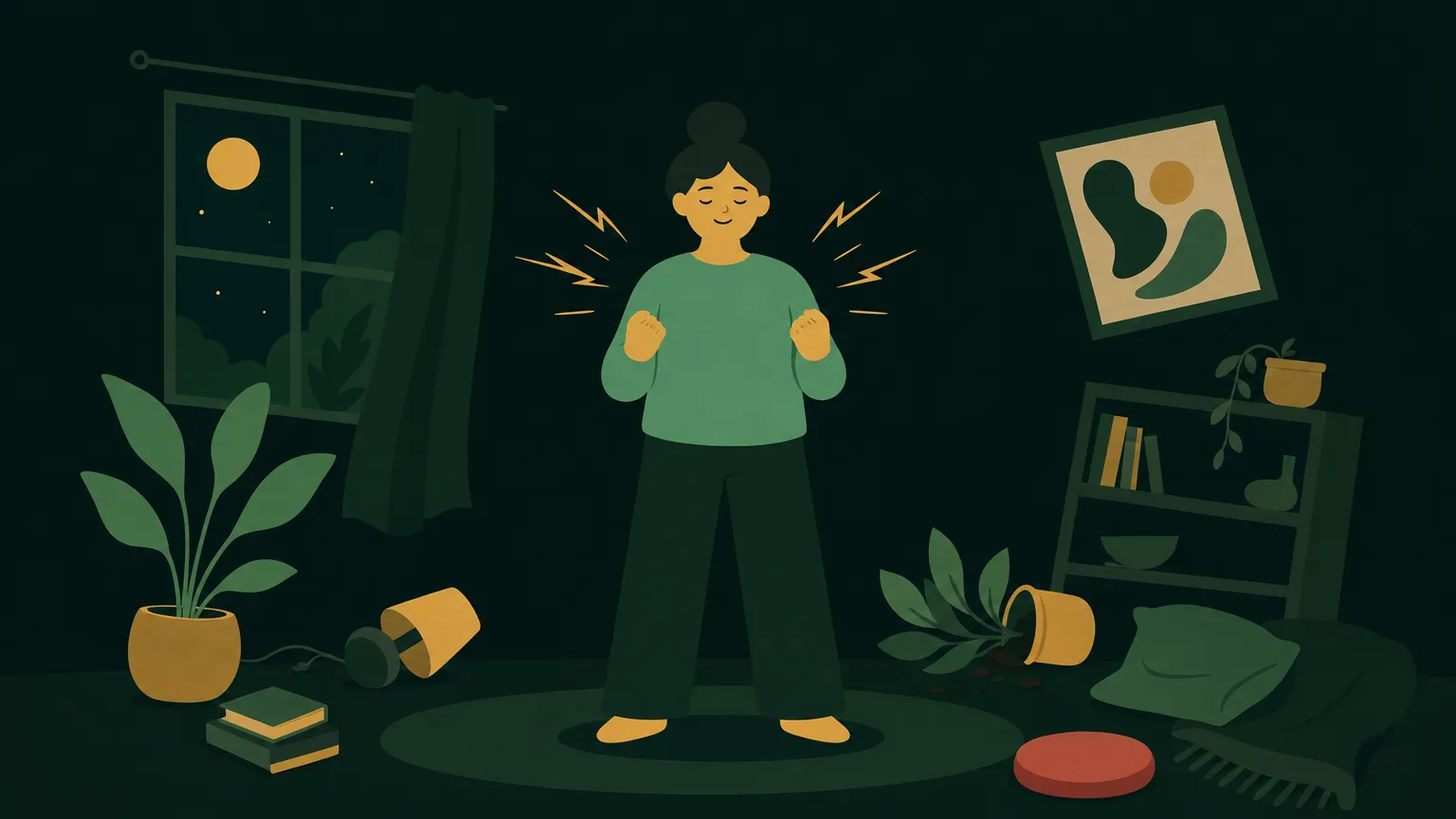
Rapid, unpredictable emotional shifts — from fine to furious to tearful within minutes — reflect your brain relearning how to regulate emotions without cannabis.
40-50% of people quitting cannabis
Peaks day 7
~Peaks day 30
Recovery Timeline
| Metric | Value |
|---|---|
| Prevalence among quitters | 40-50% of people quitting cannabis |
| Typical onset | Day 2 |
| Peak intensity | Day 7 |
| Expected resolution | ~Day 30 |
| Total duration | 28 days (approximate) |
One hour you’re fine. The next you’re furious about nothing. Then you’re crying at a commercial. Then you feel numb. These aren’t signs of a mental health crisis — they’re signs of a brain that temporarily lost its emotional thermostat and is in the process of rebuilding it.
Why Quitting Weed Causes Mood Swings
Cannabis acts as an emotional buffer. THC dampens the amygdala (reducing emotional reactivity), enhances GABA (promoting calm), and stimulates dopamine (creating mild euphoria). For regular users, cannabis becomes the primary tool for emotional regulation.
When you remove that tool, multiple systems destabilize simultaneously:
- Serotonin fluctuations cause rapid shifts between low mood and baseline
- Dopamine deficiency creates periods of anhedonia punctuated by sudden cravings
- Cortisol spikes trigger unexpected anxiety or anger
- GABA/glutamate imbalance creates oscillations between overstimulation and emotional flatness
The key insight is that these swings aren’t random — they reflect different neurotransmitter systems recovering at different rates. Serotonin, dopamine, GABA, and cortisol each have their own recovery timeline. When they’re out of sync with each other, you experience it as emotional chaos.
When Does It Start, Peak, and End?
- Onset: Days 1–3. Emotional volatility appears early but may be overshadowed by physical symptoms.
- Peak: Days 5–14. This is the window of maximum emotional instability. You may experience multiple mood shifts per day.
- Improvement: Days 14–21. Swings become less frequent and less extreme.
- Resolution: Days 21–45. Emotional regulation normalizes as neurotransmitter systems synchronize.
What Actually Helps
1. Emotional Labeling
When a mood shift hits, name it specifically: “I’m feeling sudden anger, probably from cortisol. This will pass in 15–20 minutes.” Brain imaging studies show that labeling emotions activates the prefrontal cortex and reduces amygdala reactivity. Name it to tame it.
2. Mood Tracking
Track your moods 3–4 times per day with a simple 1–10 rating. Over time, you’ll see that despite the swings, your average is trending upward. Klar’s symptom tracking helps you see patterns your emotional brain can’t perceive in the moment.
3. Routine as Stabilizer
External structure compensates for internal chaos. Maintain consistent wake times, meal times, exercise times, and bedtimes. When your emotions are unpredictable, a predictable routine provides an anchor.
4. Delay Major Decisions
Don’t quit your job, end a relationship, or make financial decisions during weeks 1–4 of withdrawal. Your emotional evaluation system is unreliable right now. Write decisions down and revisit them in a week. If they still feel right, then act.
5. Allow the Tears
Many people, especially men, are surprised by how much they cry during withdrawal. This is normal and healthy. Crying releases stress hormones and neurotransmitters. It’s a physiological release mechanism. Let it happen.
When to Seek Professional Help
- Mood swings are so severe they’re affecting your ability to work or maintain relationships
- You’re experiencing thoughts of self-harm during low swings
- Mood instability is worsening (not improving) after 4 weeks
- You suspect bipolar disorder or another mood disorder (withdrawal can unmask these)
988 Suicide & Crisis Lifeline: Call or text 988
SAMHSA National Helpline: 1-800-662-4357 (free, confidential, 24/7)
Common questions
How long does mood swings last after quitting weed?+
Is mood swings normal when quitting cannabis?+
What helps with mood swings after stopping weed?+
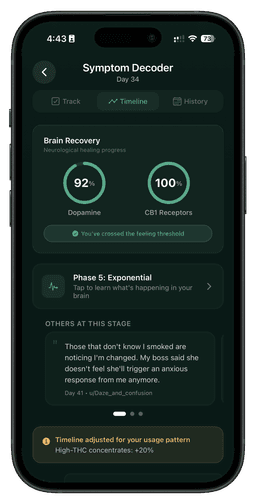
Track your progress
See your brain healing in real time
Klar tracks 47 withdrawal symptoms and visualizes your dopamine and CB1 receptor recovery day by day.
Related Symptoms
Related Timeline
Related articles
Medical Disclaimer: This content is for informational purposes only and does not constitute medical advice, diagnosis, or treatment. Always consult a qualified healthcare provider for medical guidance. If you are in crisis, call 988 (Suicide & Crisis Lifeline) or text HOME to 741741.
Every figure on this page traces to peer-reviewed research and the 30-symptom dataset behind Klar. How we source our data