
Paradoxical dry mouth during cannabis withdrawal as salivary gland CB1 receptors recalibrate.
15-20%
Peaks day 4
~Peaks day 10
Recovery Timeline
| Metric | Value |
|---|---|
| Prevalence among quitters | 15-20% |
| Typical onset | Day 1 |
| Peak intensity | Day 4 |
| Expected resolution | ~Day 10 |
| Total duration | 9 days (approximate) |
You expected cottonmouth to stop when you stopped smoking. Instead, dry mouth persists or even worsens for a few days. This is counterintuitive but has a straightforward explanation.
Why It Happens
CB1 receptors are present in your salivary glands (submandibular and parotid). THC inhibits saliva production — that is what causes cottonmouth during use. With chronic exposure, your salivary glands adapt by increasing sensitivity to cannabinoid signaling.
When you quit, the withdrawal period involves temporary salivary gland dysfunction as CB1 receptors recalibrate. Dehydration from night sweats and reduced fluid intake (from appetite loss) compounds the issue.
Timeline
- Onset: Day 1–2
- Peak: Days 2–5
- Resolution: Days 7–10. One of the shortest withdrawal symptoms.
What Helps
- Sip water frequently throughout the day
- Sugar-free gum or lozenges stimulate saliva production
- Avoid alcohol-based mouthwash which worsens dryness
- Humidifier at night if you breathe through your mouth while sleeping
- Limit caffeine and alcohol which are diuretics
Dry mouth is uncomfortable but resolves quickly and rarely requires medical attention.
Common questions
How long does dry mouth last after quitting weed?+
Is dry mouth normal when quitting cannabis?+
What helps with dry mouth after stopping weed?+
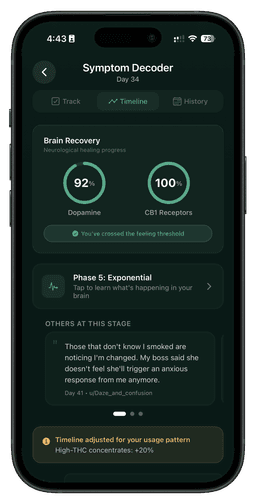
Track your progress
See your brain healing in real time
Klar tracks 47 withdrawal symptoms and visualizes your dopamine and CB1 receptor recovery day by day.
Related Symptoms
Related articles
Medical Disclaimer: This content is for informational purposes only and does not constitute medical advice, diagnosis, or treatment. Always consult a qualified healthcare provider for medical guidance. If you are in crisis, call 988 (Suicide & Crisis Lifeline) or text HOME to 741741.
Every figure on this page traces to peer-reviewed research and the 30-symptom dataset behind Klar. How we source our data