
Excessive hunger that appears 2-3 weeks after quitting weed, as appetite regulation overshoots during recovery.
20-30%
Peaks day 28
~Peaks day 45
Recovery Timeline
| Metric | Value |
|---|---|
| Prevalence among quitters | 20-30% |
| Typical onset | Day 14 |
| Peak intensity | Day 28 |
| Expected resolution | ~Day 45 |
| Total duration | 31 days (approximate) |
First you couldn’t eat anything. Now you cannot stop eating. The appetite rebound is a less-discussed phase of cannabis recovery that catches many people off guard.
Why It Happens
During early withdrawal, appetite drops because your hypothalamic CB1 receptors are depleted. Around weeks 2–4, those receptors begin recovering — and they temporarily overshoot. Your hunger signaling system goes from suppressed to hyperactive.
Where you are in that rebound window tracks with how much THC is still clearing — the free THC detox calculator gives you a personalized clearance estimate from your usage pattern and body stats.
Additionally, your body may be genuinely calorie-depleted from the initial loss-of-appetite phase. Your brain detects the energy deficit and drives increased food-seeking behavior to compensate.
Emotional eating also plays a role. With emotions returning and the coping mechanism of cannabis gone, food becomes a substitute reward source for your dopamine-depleted brain.
Timeline
- Onset: Days 10–14 (as initial appetite suppression resolves)
- Peak: Days 21–35
- Resolution: Days 35–45 as appetite regulation normalizes
What Helps
1. Eat Regular, Balanced Meals
Prevent extreme hunger by eating consistent meals with protein, fat, and complex carbs. Skipping meals triggers binge eating.
2. Stay Hydrated
Thirst is often misinterpreted as hunger. Drink a glass of water before eating and reassess.
3. Allow It (Within Reason)
Your body is recovering. It needs fuel. If you are eating mostly healthy food and are genuinely hungry (not boredom-eating), increased appetite is a sign of recovery, not a problem.
4. Find Non-Food Rewards
If eating is replacing cannabis as your dopamine source, intentionally cultivate other rewards: exercise, social connection, creative activities, music.
When to Seek Help
- Binge eating feels out of control
- Significant weight gain is causing health concerns
- Eating patterns suggest an eating disorder developing
Common questions
How long does appetite rebound last after quitting weed?+
Is appetite rebound normal when quitting cannabis?+
What helps with appetite rebound after stopping weed?+
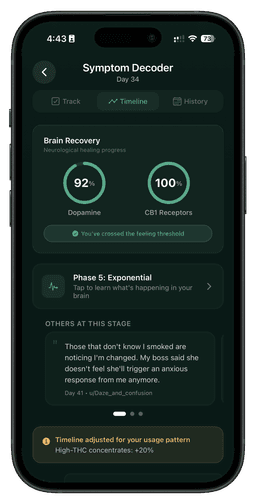
Track your progress
See your brain healing in real time
Klar tracks 47 withdrawal symptoms and visualizes your dopamine and CB1 receptor recovery day by day.
Related Symptoms
Related Timeline
Medical Disclaimer: This content is for informational purposes only and does not constitute medical advice, diagnosis, or treatment. Always consult a qualified healthcare provider for medical guidance. If you are in crisis, call 988 (Suicide & Crisis Lifeline) or text HOME to 741741.
Every figure on this page traces to peer-reviewed research and the 30-symptom dataset behind Klar. How we source our data