
Chest pressure and tightness during cannabis withdrawal, usually from anxiety-driven muscle tension and hyperventilation.
15-25%
Peaks day 7
~Peaks day 21
Recovery Timeline
| Metric | Value |
|---|---|
| Prevalence among quitters | 15-25% |
| Typical onset | Day 2 |
| Peak intensity | Day 7 |
| Expected resolution | ~Day 21 |
| Total duration | 19 days (approximate) |
A band around your chest. Difficulty taking a full breath. A pressing sensation that makes you wonder if something is wrong with your heart. Chest tightness during cannabis withdrawal is alarming but is almost always benign — caused by anxiety and muscle tension, not cardiac problems.
Why It Happens
Three mechanisms combine to create chest tightness during withdrawal:
- Anxiety-driven hyperventilation: Withdrawal anxiety causes shallow, rapid breathing. This reduces CO2 levels, which paradoxically makes you feel short of breath and creates chest tightness.
- Intercostal muscle tension: The muscles between your ribs tense during stress responses, creating a band-like sensation around the chest.
- Vagal tone changes: THC affects vagal nerve activity. Withdrawal-related vagal changes can cause sensations of chest pressure.
Timeline
- Onset: Days 2–5 (correlates with peak anxiety)
- Peak: Days 5–10
- Resolution: Days 14–21 as anxiety subsides
What Helps
1. Diaphragmatic Breathing
Breathe into your belly, not your chest. Place one hand on your chest and one on your abdomen — only the lower hand should move. Breathe in for 4 seconds, out for 6 seconds. This corrects hyperventilation and relaxes intercostal muscles.
2. Stretching
Doorframe chest stretches and gentle back bends open up tight chest muscles. Rounded-shoulder posture (common during anxiety) compresses the chest.
3. Reassurance
Anxiety about chest tightness creates more anxiety, which creates more chest tightness. Understanding that this is a common, benign withdrawal symptom breaks the cycle.
When to Seek Medical Attention
Seek immediate medical care if chest tightness is accompanied by:
- Sharp, stabbing pain (rather than pressure)
- Pain radiating to the arm, jaw, or back
- Rapid or irregular heartbeat
- Shortness of breath at rest
- Lightheadedness or fainting
These could indicate a cardiac event unrelated to withdrawal. When in doubt, get checked. It is always better to be safe.
Common questions
How long does chest tightness last after quitting weed?+
Is chest tightness normal when quitting cannabis?+
What helps with chest tightness after stopping weed?+
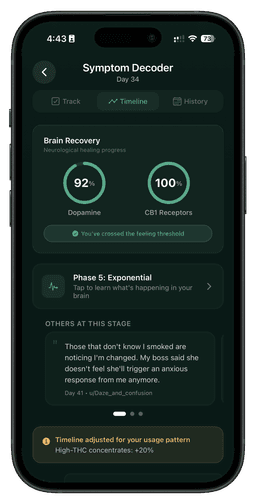
Track your progress
See your brain healing in real time
Klar tracks 47 withdrawal symptoms and visualizes your dopamine and CB1 receptor recovery day by day.
Related Symptoms
Related articles
Medical Disclaimer: This content is for informational purposes only and does not constitute medical advice, diagnosis, or treatment. Always consult a qualified healthcare provider for medical guidance. If you are in crisis, call 988 (Suicide & Crisis Lifeline) or text HOME to 741741.
Every figure on this page traces to peer-reviewed research and the 30-symptom dataset behind Klar. How we source our data